- FitzGerald Law Company
-
https://www.fitzgeraldlawcompany.com
-
Actualización de la Visa H-1B 2026: Plazos, Requisitos y Excepciones de Tarifa de $100,000
Posted By
Florin Nita
On
In
Artículos,Artículos de Inmigración |
Comments Disabled
La visa H-1B[1] sigue siendo una de las opciones de inmigración basada en empleo más importantes para profesionales extranjeros calificados que desean trabajar en los Estados Unidos. Cada año, los empleadores estadounidenses compiten por un número limitado de visas H-1B bajo un estricto sistema federal de cupos administrado por el Servicio de Ciudadanía e Inmigración de los Estados Unidos (USCIS).
Solo hay 65,000 visas H-1B disponibles cada año para personas con un título universitario de 4 años (Bachelor’s Degree) o su equivalente, y únicamente 20,000 visas H-1B adicionales, exclusivamente para personas que obtuvieron su título de posgrado (Maestría o Doctorado) en una universidad de EE. UU., para un total de 85,000.
Las inscripciones de la visa H-1B generalmente son aceptadas por USCIS durante 2 semanas de marzo, y las selecciones iniciales suelen notificarse antes del 31 de marzo de cada año. La distribución de visas H-1B se basa en un “Año Fiscal”, que comienza el 1 de octubre de cada año.
Para la temporada de registro H-1B 2026 (cupo del Año Fiscal 2027), los empleadores y trabajadores extranjeros deben estar atentos a:
Plazos actualizados de registro electrónico
Exenciones a la tarifa de presentación de $100,000.00 para ciertas peticiones
Requisitos de elegibilidad para ocupaciones especializadas
Obligaciones de salario y cumplimiento del empleador
El proceso de la visa H-1B[1] es altamente sensible a los plazos. A continuación, nuestros abogados de inmigración en Boston explican lo que necesita saber para prepararse de forma eficaz y evitar errores costosos. Si desea ayuda para comprender sus opciones de inmigración por empleo, programe una consulta con uno de nuestros abogados con experiencia en inmigración laboral[3] llamando al: 617-303-2601 (ext. 0) o completando nuestro formulario de solicitud de cita en línea[4].
Plazos de Registro y Presentación para la Visa H-1B 2026 (Año Fiscal 2027)
Ventana de registro del año fiscal 2027 (ciclo de presentación de 2026)
4 de marzo – 19 de marzo de 2026: Período de registro electrónico para el cupo H-1B del Año Fiscal 2027. Los empleadores deben registrar a cada beneficiario potencial para la visa H-1B mediante una cuenta en línea de USCIS durante este período. Los empleadores deben:
Tener una cuenta en línea adecuada de USCIS
Presentar un registro por cada trabajador H-1B potencial
Pagar la tarifa de registro requerida
Selección (Lotería) y Presentacion de Peticion de Visa H-1B
31 de marzo de cada año—USCIS generalmente notifica a los empleadores sobre las selecciones de la lotería antes de esta fecha.
La Petición H-1B y los documentos de respaldo necesarios deben presentarse para los candidatos seleccionados dentro de los 90 días posteriores a la notificación de selección.
Después de que USCIS calcula cuántas peticiones H-1B iniciales se han presentado, seleccionará candidatos adicionales periódicamente hasta que se distribuyan las 85,000 visas.
Fecha de inicio del trabajo
1 de octubre de 2026: Esta es la fecha más temprana en la que los trabajadores aprobado para la visa H-1B pueden comenzar a trabajar en EE. UU. (para peticiones del Año Fiscal 2027), ya que la visa técnicamente queda disponible el primer día del “Año Fiscal”.
Dado que la demanda suele superar la oferta de visas H-1B, la preparación temprana y la precisión son fundamentales. No cumplir cualquiera de estos plazos puede significar perder la oportunidad para el año.
¿Qué se Considera una Ocupación Especializada para la visa H-1B?
Aplicación teórica y práctica de conocimientos especializados; y
Al menos un título universitario (bachelor’s) o su equivalente en un campo específico relacionado con el puesto.
Campos comunes que suelen calificar incluyen:
Ingeniería
Ciencias de la computación y tecnología de la información
Matemáticas y ciencia de datos
Arquitectura
Contabilidad y finanzas
Profesiones de la salud
Investigación y educación superior
Es importante que el título académico esté directamente relacionado con las funciones del puesto. Requisitos de titulación generales, sin especialización, pueden no calificar.
¿Para Quién es la Visa H-1B?
La elegibilidad para la visa H-1B depende tanto del puesto como de la cualificación del profesional extranjero.
1. El Empleo Debe de Calificar Como Ocupación Especializada
Para calificar, la evidencia debe demostrar que:
Normalmente se requiere un título universitario (bachelor’s) o su equivalente en una especialidad específica para ingresar al puesto;
El requisito de título es común en la industria; o
Las funciones del puesto son tan especializadas y complejas que requieren dicho título.
2. El Empleado Debe de Cumplir con los Requisitos de Educación
El ciudadano extranjero debe tener:
Un título universitario de EE. UU. (o superior) en la especialidad pertinente;
Un título extranjero equivalente a un título universitario de EE. UU.; o
Educación y/o experiencia laboral progresiva equivalente al título requerido.
Las visas H-1B requieren el patrocinio de un empleador estadounidense. Una persona solo puede auto peticionarse para una visa H-1B si es propietaria del negocio que presenta la petición. En específico, un empleador en EE. UU. debe:
Ofrecer un puesto que califique y que pague el salario prevaleciente para ese trabajo específico en el lugar donde se va a realizar;
Presentar la Solicitud de Condiciones Laborales (LCA);
Presentar el Formulario I-129 ante USCIS.
Cómo Funciona el Nuevo Proceso de Selección de USCIS para la Visa H-1B
El sistema tradicional de lotería H-1B ha sido reformado para la temporada del cupo del Año Fiscal 2027, ya que USCIS reemplazó la selección puramente aleatoria de la lotería por un sistema ponderado basado en salarios que prioriza puestos mejor remunerados y de mayor especialización.
Cambios Clave en la Selección del Cupo H-1B
1. Selección Ponderada en Lugar de una Lotería Aleatoria
USCIS ya no utilizará una lotería completamente aleatoria cuando los registros excedan el cupo anual. En su lugar, cada registro será “calificado” y luego “ponderado” al incorporarse al grupo de selección según el nivel salarial del puesto ofrecido, lo que significa que los registros para posiciones con salarios más altos tendrán una mayor probabilidad de selección.
2. Los Niveles Salariales Influyen en las Probabilidades de Selección
USCIS utilizará categorías de salario prevaleciente (Niveles I–IV).
Los puestos con niveles salariales más altos se “ponderarán” más al entrar al grupo de selección (por ejemplo, un puesto de Nivel IV podría tener hasta cuatro veces más probabilidad de ser seleccionado en comparación con un puesto de Nivel I).
Este modelo de selección ponderada por salario aumenta la probabilidad de que se seleccionen puestos especializados y de salarios altos, mientras que los empleos de nivel inicial siguen siendo elegibles.
3. El Cupo para Visas H-1B se Mantendrá Igual
El cupo anual de visas H-1B sigue incluyendo:
65,000 visas regulares
20,000 visas para personas con un título avanzado (Maestría o Doctorado) de una universidad de Estados Unidos
USCIS continuará respetando estos límites numéricos aunque cambie el método de selección.
Lo qué Significan los Cambios del 2026 en el Procesamiento de la Visa H-1B para Empleadores y Solicitantes
Los empleadores deben evaluar cuidadosamente el puesto ofrecido para maximizar el Nivel Salarial y mejorar sus probabilidades de selección.
Los profesionales extranjeros con ofertas de empleo de mayor salario y habilidades avanzadas generalmente tendrán mejores posibilidades de ser seleccionados bajo el cupo de visas H-1B.
Aunque todos los niveles salariales siguen siendo elegibles, la política claramente recompensa los niveles salariales más altos con una mayor probabilidad de selección.
Sea usted un empleador que busca construir una fuerza laboral global o un profesional que desea avanzar su carrera en Estados Unidos, estamos aquí para guiarle en cada paso. Nuestros abogados de visa H-1B[7] evalúan las credenciales laborales, revisan la oferta de trabajo y desarrollan una estrategia clara adaptada a su caso.
📞 Llame ahora para programar una cita con uno de nuestros abogados de visa H-1b al 617-303-2601 (ext. 0) o envíe su solicitud para una consulta de visa H-1B[4] en línea.
La Nueva Tarifa de $100,000.00 para Visas H-1B: Lo Que los Empleadores Deben Saber
Uno de los cambios más significativos que afectan las presentaciones para visa H-1B es la introducción de una tarifa de $100,000.00 para ciertas peticiones de visa H-1B sujetas al cupo anual, presentadas después del 21 de septiembre de 2025. Esta tarifa es adicional y separada de las tarifas estándar de USCIS y otras tarifas estatutarias para la visa H-1B. Afortunadamente existen excepciones importantes.
Comprender quién debe pagar la tarifa H-1B de $100,000.00 es fundamental tanto para los empleadores como para los trabajadores H-1B potenciales.
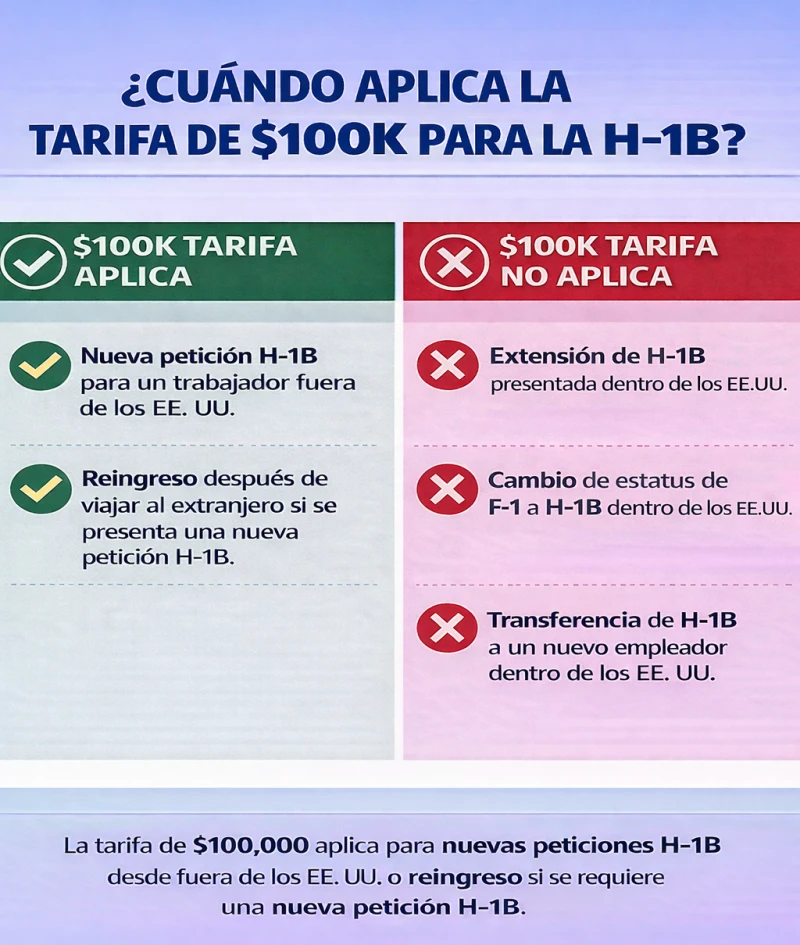
Cuando se Requiere la Tarifa de $100,000.00 para la Visa H-1B?
La tarifa de $100,000.00 para la visa H-1B[8] se exige en situaciones específicas, conforme a la “Proclamación Presidencial sobre Restricción de Entrada de Ciertos Trabajadores No Inmigrantes”, que involucra a trabajadores que deben obtener su estatus H-1B desde fuera de los Estados Unidos. Por ejemplo, cuando:
La petición requiere procesamiento consular, notificación de puerto de entrada o inspección previa al vuelo para un beneficiario que no cuenta con una visa H-1B válida.
Una petición presentada para cambio de estatus, enmienda o extensión de estadía es denegada por USCIS, y se instruye al trabajador a solicitar la visa H-1B en el extranjero.
Esto puede ocurrir si:
El beneficiario no mantuvo un estatus migratorio válido en Estados Unidos
El beneficiario salió de los Estados Unidos antes de que USCIS aprobara la petición pendiente.
USCIS rechaza la solicitud de cambio de estatus o extensión de estadía por motivos procedurales o relacionados con la vigencia de estatus.
En estos casos, la visa H-1B debe obtenerse mediante procesamiento consular, lo que activa la tarifa de entrada de $100,000.00.
Cuándo no se Requiere la Tarifa de $100,000.00 para la Visa H-1B?
No todas las presentaciones H-1B están sujetas a este recargo. La tarifa adicional de $100,000.00 no se requiere en los siguientes casos:
La petición se presentó antes del 21 de septiembre de 2025.
El trabajador ya tiene estatus H-1B válido o una visa H-1B (por ejemplo, al transferirse de empleador, etc.).
USCIS aprueba un cambio de estatus, enmienda o extensión de estadía presentada dentro de EE. UU., incluso si la presentación ocurrió en o después del 21 de septiembre de 2025, incluyendo:
Extensiones H-1B para trabajadores que ya están en estatus H-1B válido
Peticiones de cambio de empleador (transferencias H-1B)
Enmiendas a peticiones H-1B existentes
Peticiones para cambiar a estatus H-1B dentro de EE. UU. (por ejemplo, cambio de estatus de F-1 a H-1B)
Ciertos empleadores exentos del cupo (como instituciones de educación superior que califican y organizaciones de investigación sin ánimo de lucro)
Es importante destacar que si un trabajador viaja posteriormente al extranjero para obtener el sello de visa basado en una petición H-1B ya aprobada, es posible que la tarifa de $100,000.00 no aplique.
Los empleadores deben verificar cuidadosamente si califican para una exención, ya que la presentación incorrecta de tarifas puede resultar en rechazo o demoras.
Exención por Interés Nacional de la tarifa Adicional de $100,000.00 para la Visa H-1B
El Secretario de Seguridad Nacional puede otorgar una exención por interés nacional de la tarifa adicional de $100,000.00 para la visa H-1B si se cumplen todos los criterios siguientes:
El empleo del trabajador sirve al interés nacional de los Estados Unidos.
No hay un trabajador estadounidense calificado disponible para el puesto.
El beneficiario no representa una amenaza para la seguridad de EE. UU. ni para el bienestar público.
Exigir que el empleador pague la tarifa de $100,000.00 perjudicaría significativamente los intereses de Estados Unidos
Las solicitudes de exención deben presentarse ante el Departamento de Seguridad Nacional (DHS) antes de presentar la petición H-1B, junto con la documentación de respaldo, mediante el proceso designado por DHS.
Dado que la tarifa adicional de $100,000.00 para las visas H-1B depende en gran medida de si la petición requiere procesamiento consular o emisión de visa en el extranjero, los empleadores deben evaluar cuidadosamente la estrategia de presentación para evitar costos inesperados y problemas de cumplimiento.
Consideraciones Estratégicas para Solicitudes de Visa H-1B en 2026
Con mayor escrutinio y tarifas más altas, la planificación estratégica es más importante que nunca.
Para Empleadores:
Preparar los materiales de registro con anticipación
Revisar datos salariales temprano para evitar demoras en la LCA
Confirmar si aplica la tarifa de $100,000.00
Mantener documentación de cumplimiento de condiciones
Para el Extranjero Profesional Solicitante de Visa H-1b:
Confirmar que su título académico se alinea directamente con el puesto ofrecido
Preparar evaluaciones de credenciales con anticipación
Mantener estatus legal mientras espera resultados de selección
Coordinar estrechamente con su empleador sobre el calendario y tiempos
Cómo Pueden Ayudarle los Abogados de Inmigración de FitzGerald Law Company
En FitzGerald Law Company en Boston, nuestros abogados de inmigración empresarial[3] para Visas H-1B brindan representación integral para empleadores y profesionales calificados en Massachusetts y en todo el país.
Nuestros abogados de inmigración cuentan con años de experiencia ayudando con:
Registro en la lotería y presentación de peticiones de Visa H-1B
Análisis de tarifas y revisión de exenciones
Cumplimiento de Condiciones del LCA y análisis salarial
Transferencias y extensiones de visa H-1B
Estrategia H-1B para empleadores exentos del cupo anual para estas visas
Programe su Consuta para Visa H-1B Hoy
¿Tiene preguntas sobre la elegibilidad para la visa H-1B o el proceso de solicitud? Nuestros abogados de inmigración laboral experimentados están aquí para ayudarle. Revisaremos sus cualificaciones, evaluaremos su oferta de empleo y le guiaremos en cada paso del proceso de solicitud de Visa H-1B.
The H-1B visa[9] remains one of the most important employment-based immigration options for skilled foreign professionals seeking to work in the United States. Each year, U.S. employers compete for a limited number of H-1B visas under a strict federal cap system administered by U.S. Citizenship and Immigration Services (USCIS).
There are only 65,000 H-1B visas available each year for individuals with a 4-year Bachelor’s Degree or its equivalent, and only an additional 20,000 H-1B visas, exclusively for individuals who received their postgraduate degree (Masters or Doctorate) from a U.S. university, for a total of 85,000.
H-1B visa registrations are generally accepted by USCIS in March and the initial selections are usually notified by the 31st of March each year. The distribution of H-1B visas are based upon a “Fiscal Year,” which begins on the 1st of October each year.
For the 2026 H-1B registration season (FY 2027 cap), employers and foreign workers must be aware of:
Updated electronic registration deadlines
Exemptions to the $100,000.00 filing fee for certain petitions
Eligibility requirements for specialty occupations
Employer wage and compliance obligations
The H-1B visa process[9] is highly time-sensitive. Below, our Boston immigration attorneys break down what you need to know to prepare effectively and avoid costly mistakes.If you would like help understanding your employment-based immigration options[12] schedule a consultation with one of our experienced employment immigration lawyers by calling: 617-303-2600 (ext. 0) or filling out our online appointment request form.
2026 H-1B Visa Registration & Filing Deadlines (for FY 2027)
FY 2027 (2026 Filing Cycle) Registration Window
March 4 – March 19, 2026: USCIS opens the electronic registration period for the FY 2027 H-1B cap. Employers must have each prospective H-1B beneficiary registered through an USCIS online account during this window. Employers must:
Have an appropriate USCIS online account
Submit a registration for each prospective H-1B worker
Pay the required registration fee
Lottery Selection and H1-B Petition Filing
USCIS typically notifies employers of lottery selections by March 31st every year.
H-1B Petition and the necessary supporting documents must be filed for selected candidates within 90 days of notice of their selection.
After USCIS calculates the number of initial H-1B petitions that have been filed, additional candidates will periodically be selected until all 85,000 visas are distributed.
Work Start Date
October 1, 2026: This is the earliest date approved H-1B workers under the cap may begin employment in the U.S. (for FY 2027 petitions), as the visa technically becomes available on the 1st day of the “Fiscal Year.”
Because demand routinely exceeds supply for H-1b visas, early preparation and accuracy are critical.Missing any of these deadlines can mean losing an opportunity for the entire year.
H-1b visas require a U.S. employer sponsorship.An individual can only self-petition for an H-1B visa, if they are an owner of the business that is filing the visa petition.Specifically, a U.S. employer must:
Offer a qualifying job that pays the prevailing wage for that specific job in the location where it will be performed.
File the Labor Condition Application (LCA)
Submit Form I-129 to USCIS
How the New USCIS H-1B Visa Selection Process Works
The traditional H-1B visa lottery has been overhauled for the FY 2027 cap season, with U.S. Citizenship and Immigration Services (USCIS) replacing pure random selection with a wage-based weighted system that prioritizes higher-paid, higher-skilled roles.
Key Changes to the H-1B Cap Selection Process
1. Weighted Selection Instead of Random Lottery
USCIS will no longer use a completely random lottery when registrations exceed the annual cap. Instead, each registration will be “rated” and then “weighted” when placed into the selection pool based on the wage level of the position offered, meaning registrations for positions with higher wages will have an increased chance of being selected.
2. Wage Levels Drive Odds of Selection
USCIS will use prevailing wage categories (Level I–IV).
Positions with higher wage levels will be “weighted” more when placed into the lottery pool (e.g., a Wage Level IV position may be four times more likely to be selected vs. a Wage Level I position).
This wage-weighted selection model makes it more likely that high-wage, specialized positions will be selected, while still allowing entry-level roles to be eligible.
3. H1-b Caps will Remain the Same
The annual H-1B visa cap still includes:
65,000 regular visas
20,000 visas for holders of an advanced degrees (Master’s or Doctorate) from a U.S. university
USCIS will continue to adhere to these numerical limits even as the selection method has changed.
What the 2026 H-1b Visa Process Changes Mean for Employers & Applicants
Employers should consider carefully the position, which is being offered, to maximize the Wage Level in order to improve their odds of being selected.
Foreign professionals with higher-pay job offers and advanced skills will generally have better chances of being selected under the cap.
Although all wage levels remain eligible, the policy clearly rewards higher wage levels with improved selection probability.
Whether you are an employer building a global workforce or a professional pursuing U.S. career opportunities, we are here to guide and assist at every step.Our dedicated H-1b visa lawyers will assess employment credentials, review the employment offer, and develop a clear strategy tailored to your case.
The New $100,000.00 H-1B Fee: What Employers Must Know
One of the most significant changes affecting recent H-1B filings is the introduction of a $100,000.00 fee for certain cap-subject petitions, after the effective date of September 21, 2025. This is separate from standard USCIS filing fees and other statutory H-1B fees.
Understanding who must pay the $100,000.00 H-1B fee is critical for both employers and prospective H-1B workers.
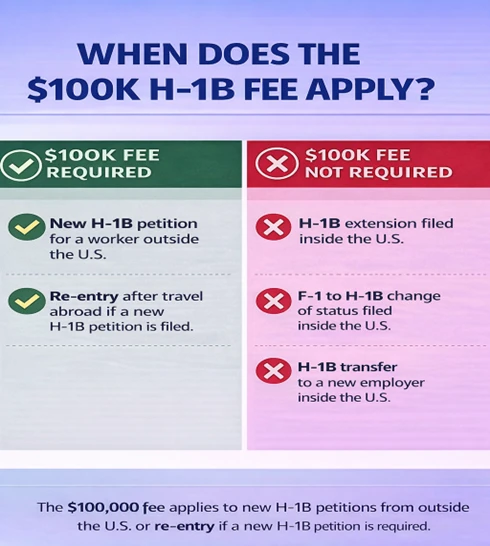
When is the $100,000.00 H-1b Fee Required?
The $100,000.00 H-1B visa fee[16] is required in specific situations, according to the “Presidential Proclamation on Restriction on Entry of Certain Nonimmigrant Workers,” involving workers who must obtain their H-1B status from outside the United States. Such as when:
The petition requests consular processing, port-of-entry notification, or pre-flight inspection for the beneficiary who does not have a valid H-1B visa already.
A petition filed as a change of status, amendment, or extension of stay is denied by USCIS, and the worker is instructed to apply for the H-1B visa abroad.
This can happen if:
The beneficiary failed to maintain valid immigration status in the U.S.
The beneficiary departed the United States before USCIS approved the pending petition.
USCIS rejects the request for a change or extension for procedural or status-related reasons.
In these cases, the H-1B must be obtained through consular processing, triggering the $100,000.00 entry-based fee.
When is the $100,000.00 H-1B Fee Not Required?
Not all H-1B filings are subject to the new surcharge. The additional $100,000.00 fee is not required in the following cases:
The petition was filed before September 21, 2025.
The worker already holds valid H-1B status or an H-1B visa (for example, when transferring employers, etc.)
USCIS approves a change of status, amendment, or extension of stay filed within the U.S. — even if the filing occurred on or after September 21, 2025, including:
H-1B extensions for workers already in valid H-1B status
Change-of-employer petitions (H-1B transfers)
Amendments to existing H-1B petitions
Petitions to change status to an H-1b visa within the United States (for example, a change of status petition from F-1 to H-1b)
Certain cap-exempt employers (such as qualifying institutions of higher education and nonprofit research organizations)
Importantly, if a worker later travels abroad to obtain a visa stamp based on an already approved H-1B petition, the $100,000.00 fee may not apply.
Employers should verify exemption eligibility carefully, as improper fee submission may result in rejection or delay.
National Interest Exception to the $100,000.00 H-1B Fee
The Secretary of Homeland Security may grant a national interest exemption from the $100,000.00 H-1B fee if all of the following criteria are met:
The worker’s employment serves the national interest of the United States.
No qualified U.S. worker is available for the position.
The beneficiary does not pose a threat to U.S. security or public welfare.
Requiring the employer to pay the $100,000.00 fee would significantly harm U.S. interests.
Requests for exemption must be submitted to DHS before filing the H-1B petition, along with supporting documentation, through the designated DHS process.
Because the $100,000.00 H-1B visa fee depends largely on whether the petition requires consular processing or overseas visa issuance, employers should carefully evaluate filing strategy to avoid unexpected costs and compliance issues.Call: 617-303-2600 (ext.0) to request a consultation with one of our experienced H-1b Visa Lawyers or fill out our online appointment request.[15]
Strategic Considerations for 2026 H-1B Filings
With heightened scrutiny and increased fees, strategic planning is more important than ever.
For Employers:
Prepare registration materials early
Review wage data early to avoid LCA delays
Confirm whether the $100,000.00 fee applies
Maintain strict compliance documentation
For Foreign Professional H-1b Visa Applicants:
Confirm your degree aligns directly with the offered role
Prepare credential evaluations early
Maintain lawful status while awaiting lottery results
Coordinate closely with your employer on timing
How FitzGerald Law Company Can Help
At FitzGerald Law Company in Boston, our business immigration attorneys[12] provide comprehensive H-1B representation for employers and skilled professionals across Massachusetts and nationwide.
Our skilled immigration attorneys assist with:
H-1B lottery registration and petition filing
Fee analysis and exemption review
LCA compliance and wage analysis
H-1B transfers and extensions
Cap-exempt H-1B strategy
Schedule Your H-1B Visa Consultation Today
Have questions about H-1B eligibility or the application process? Our experienced employment immigration lawyers[12] are here to help. We will review your background, evaluate your job offer, and guide you through every step of the H-1B process.
📞 Call us at (617) 303-2600 (ext.0) or 📩Contact us online[15] to schedule a consultation with one of our H-1b attorneys.
Tres defensas efectivas contra la deportación a través de la ley de Cancelación de Remoción
Posted By
Florin Nita
On
In
Artículos,Artículos de Inmigración |
Comments Disabled
Ante el aumento de la aplicación estricta y muchas veces injusta, de las leyes de inmigración en Estados Unidos, la Cancelación de Deportación[17], conocida comúnmente como la “Ley de los 10 Años” , se ha convertido en una de las defensas más importantes contra la deportación para inmigrantes indocumentados en la Corte de Inmigración (EOIR).
Este beneficio migratorio permite, en casos aprobados, detener la deportación y obtener la residencia permanente legal (Green Card). Su importancia es aún mayor durante la actual administración, donde las prioridades de cumplimiento migratorio continúan intensificándose.
Este tipo de defensa es especialmente relevante en Boston y Massachusetts, donde los atrasos en los tribunales de inmigración son severos y muchos residentes de largo tiempo, con fuertes vínculos familiares, laborales y comunitarios, enfrentan procedimientos de remoción.
En este contexto, comprender los requisitos legales, el proceso ante el juez de inmigración, y la evidencia necesaria para la Cancelación de Deportación — ya sea para no residentes permanentes legales (no-LPR), residentes permanentes legales (LPR) o víctimas de violencia doméstica bajo VAWA — es fundamental.
Por Qué la Cancelación de Deportación es Más Importante que Nunca
De acuerdo con el Migration Policy Institute y el Pew Research Center:
Aproximadamente 14 millones de inmigrantes indocumentados vivían en EE. UU. en 2023, y
Casi el 80 % ha vivido en el país por 10 años o más, cumpliendo el requisito de permanencia para solicitar la Cancelación de Deportación para No Residentes Permanentes Legals (Non-LPR) conforme a INA § 240A(b)(1)
Al mismo tiempo, el Pew Research Center estima que:
4.8 % de la fuerza laboral estadounidense (8.3 millones de personas) es indocumentada (vs. 19% que es la fuerza laboral inmigrante legal en Estados Unidos)
Aunque los inmigrantes indocumentados representan solo 3.3 % de la población total, estos representan una mayor proporción de la fuerza laboral y son esenciales en sectores clave como:
Construcción
Hospitalidad
Servicios de salud
Servicios relacionados con alimentos
Estos sectores son críticos para la economía de Massachusetts.
Lazos Familiares con Americanos y Buen Comportamient Ante la Ley
Millones de inmigrantes indocumentados viven en hogares de estatus migratorio mixto, con:
Hijos ciudadanos estadounidenses
Cónyuges ciudadanos o residentes permanentes legales
Estos lazos familiares son centrales en los casos de Cancelación de Deportación, ya que la ley exige demostrar que la deportación causaría “dificultades excepcionales y extremadamente inusuales” a familiares calificados.
Además, los datos muestran que:
Solo 1.60 % de los nuevos casos del año fiscal 2025 alegan actividad criminal distinta a la posible entrada irregular (TRAC Reports – Syracuse University)
Los inmigrantes indocumentados cometen delitos a la mitad de la tasa de los ciudadanos nacidos en Estados Unidos (Cato Institute)
Atrasos en la Corte de Inmigración y Beneficio Limitado
Los Tribunales de Inmigración (EOIR) enfrentan una presión histórica. Según TRAC Reports:
Más de 3.4 millones de casos pendientes a finales de 2024
Los tiempos de espera frecuentemente superan varios años
El Tribunal de Inmigración de Boston no es la excepción
Adicionalmente, la ley federal limita la Cancelación de Deportación para los No Residentes Legales a 4,000 aprobaciones por año a nivel nacional, lo que hace que este beneficio sea altamente competitivo y discrecional.
Requisitos para Cancelación de Deportación / Remoción para No Residentes Permanentes Legales
Para calificar bajo INA § 240A(b)(1), una persona debe demostrar ante el juez de inmigración:
10 años de presencia física continua en EE. UU. antes de recibir el Notice to Appear (NTA)
Buena conducta moral durante ese período
Ausencia de condenas penales descalificantes
Dificultades “excepcionales y extremadamente inusuales” para un cónyge, padre o hijo que sea ciudadano estadounidense o residente permanente legal
Si el juez concede la solicitud, la persona puede ajustar su estatus a residente permanente legal de Estados Unidos.
Evidencia Clave en un Caso de Cancelación de Deportación para No Residente
Debido a que este beneficio es discrecional, la evidencia debe ser sólida, clara y bien organizada. Los jueces de inmigración valoran especialmente:
Pruebas de presencia continua por 10 años, tales como:
Declaraciones de impuestos
Contratos de arrendamiento
Facturas de servicios públicos y recibos de pago
Registros escolares o médicos
Correspondencia fechada
Pruebas de buena conducta moral, incluyendo:
Empleo estable
Cumplimiento fiscal en la declaración y pagos de impuestos
Servicio comunitario o voluntariado
Evidencia detallada de dificultades excepcionales, como:
Expedientes médicos
Reportes de analysis psicológico
Planes de educación especial
Documentación de dependencia económica
Declaraciones juramentadas detalladas
Evidencia objetiva demostrando las dificultades en el país donde la persona sería deportada, incluyendo:
Informes de condiciones del país
Opiniones de expertos
Análisis financieros
Testimonio consistente y creíble, tanto oral como escrito
La dificultad económica por sí sola generalmente no es suficiente. Los jueces buscan una combinación de factores serios y convincentes para probar dificultad “excepcional y extremadamente inusual”.
Requisitos para Cancelación de Remoción para Residentes Permanentes Legales (LPR)
Algunos residentes permanentes legales colocados en procesos de remoción por delitos como crímenes de vileza moral pueden ser elegibles bajo INA § 240A(a), si demuestran:
7 años de residencia continua después de admisión legal
5 años como residente permanente legal
Ninguna condena por delito grave agravado
El juez evaluará factores positivos y negativos, incluyendo:
Lazos familiares
Lazos y contribución a la comunidad
Rehabilitación
Historial de cumplimiento con la ley
Requisitos para Cancelación de Deportación VAWA para Víctimas de Violencia Doméstica
Bajo INA § 240A(b)(2), una persona puede calificar para Cancelacioón de Remoción por ser víctima de violencia domestica si es:
Cónyuge
Hijo (incluyendo hijastro)
Padre
de un ciudadano estadounidense o residente permanente legal, y fue víctima de abuso doméstico severo.
La víctima Debe Mostrar Evidencia de:
Relación calificante con un ciudadano o Residente Permanente Legal (LPR)
Abuso doméstico por el ciudadano o Residente Permanent Legal documentado
3 años de presencia continua en Estados Unidos antes de la fecha de decisión en su aplicación EOIR-42B
Buena conducta moral durante los 3 años de residencia continua
No ser inadmisible por crímenes de vileza moral, relacionados con drogas o seguridad nacional, bajo INA § 212(a)(2)
Dificultad extrema para sí misma o para su hijo o padre
Cómo Pueden Ayudar los Abogados de FitzGerald Law Company
Los casos de cancelación de deportación requieren un análisis legal estratégico, documentación exhaustiva y una defensa convincente ante el Tribunal de Inmigración.
En FitzGerald Law Company, nuestros abogados de inmigración expertos en casos de cancelación de deportación ayudan a los clientes a preparar casos estratégicos, bien documentados y persuasivos, centrados en cumplir con los requisitos legales y demostrar que el caso merece una decisión favorable por parte del juez.
Nuestros abogados de inmigración altamente cualificados representan a clientes en Boston, Massachusetts, y en todo Estados Unidos, asistiéndoles con:
As immigration enforcement continues to intensify nationwide, Cancellation of Removal has become one of the most important and limited forms of defense against deportation in Immigration Court, and it will likely become even more important during this administration.
For many undocumented immigrants and lawful permanent residents facing removal proceedings, this relief may represent the last viable legal pathway to remain in the United States and obtain lawful permanent resident status.
This defense is especially significant in states like Massachusetts, where many immigrants have lived, worked, and raised families for decades, only to now find themselves in proceedings before the Boston Immigration Court (EOIR).
Approximately 14 million undocumented immigrants lived in the United States as of 2023, and
Nearly 80% have resided in the U.S. for at least ten years, placing millions within the statutory timeframe required for non-LPR Cancellation of Removal
At the same time, undocumented immigrants play a critical role in the U.S. and Massachusetts economies (Pew Research Center[21]):
4.8% of U.S. workers (8.3 million people) are undocumented (vs. legal immigrant workers who make up 19% of the U.S. labor force)
Even though undocumented workers represent only 3.3% of the total U.S. population, they are disproportionately employed in essential industries, including:
Construction
Hospitality and food services
Health care support
Cleaning and maintenance
These sectors are particularly vital in Greater Boston and throughout Massachusetts.
Family Ties and Hardship
Many immigrants facing deportation live in mixed-status households, often with:
U.S. citizen children
U.S. citizen or lawful permanent resident spouses
These family relationships are central to Cancellation of Removal cases, which require proof that deportation would cause “exceptional and extremely unusual hardship” to qualifying relatives (U.S. citizen or legal permanent resident spouse, parent or child).
Court data further shows that:
Only 1.60% of FY 2025 new removal cases involved alleged criminal activity beyond possible illegal entry (Trac Reports Syracuse University[22])
Undocumented immigrants commit crimes at half the rate of U.S.-born citizens (Cato Institute[23] )
Immigration Court Backlogs in Boston and Limited Relief
Court backlogs exceeded 3.4 million pending cases by late 2024
Many cases now take several years to resolve
The Boston Immigration Court is no exception. Additionally, federal law caps non-LPR Cancellation of Removal approvals at 4,000 cases per year nationwide, making this relief both rare and highly competitive. Strong legal preparation is essential.
Eligibility for Non-Legal Permanent Resident (Non-LPR) Cancellation of Removal
Under INA § 240A(b)(1),[24] a non-lawful permanent resident must establish all of the following before an Immigration Judge:
At least 10 years of continuous physical presence in the United States prior to receiving a Notice to Appear (NTA)
Good moral character during that period
No disqualifying criminal convictions
Exceptional and extremely unusual hardship to a qualifying U.S. citizen or lawful permanent resident spouse, parent or child
If approved by the judge, the individual may adjust status to lawful permanent resident.
What Makes a Strong Cancellation of Removal Case
Because Cancellation of Removal is discretionary, Immigration Judges expect clear, well-organized, and persuasive evidence.
Strong Cases Typically Include:
Proof of 10+ years of continuous residence, such as:
Tax returns
Pay stubs
Leases and utility bills
School and medical records
Dated correspondence
Evidence of good moral character, including:
Steady employment
Tax compliance
Community involvement or volunteer work
Detailed hardship documentation for qualifying relatives, such as:
Medical records
Psychological evaluations
Special education plans
Financial dependency documentation
Sworn hardship affidavits
Objective supporting evidence demonstrating the hardship in the country where the person would be deported to, including:
Country conditions reports
Expert opinions
Financial analyses
Consistent sworn testimony that ties all evidence into a credible narrative
Financial hardship alone is rarely sufficient. Judges look for a combination of serious, compelling factors to show “exceptional and extremely unusual hardship”.
Eligibility for Cancellation of Removal for Lawful Permanent Residents (LPRs)
Certain lawful permanent residents placed in removal proceedings due to criminal convictions, such as crimes involving moral turpitude, may qualify under INA § 240A(a) if they demonstrate:
7 years of continuous residence after lawful admission
At least 5 years as a lawful permanent resident
No aggravated felony convictions
Immigration Judges balance positive and negative equities, including family ties, rehabilitation, and compliance with the law.
Eligibility for VAWA Cancellation of Removal for Victims of Domestic Violence
Under INA § 240A(b)(2),[25] certain victims of domestic violence may qualify for Cancellation of Removal if they are the:
Spouse
Child (including stepchild)
Parent
of a U.S. citizen or lawful permanent resident, and can demonstrate:
Their domestic relative is a U.S. citizen or Legal Permanent Resident
They were subjected to severe domestic abuse by the U.S. citizen or LPR relative
They continuously resided in the U.S. for 3 years prior to the date of the decision on their EOIR-42B application
They had good moral character during the 3-year period of continuous presence
They are not inadmissible for crimes involving moral turpitude, drug offences or national security issues per INA 212 (a)(2)(b)
Either they, their child or parent will suffer an extreme hardship
How Our Law Firm Can Help
Cancellation of Removal cases require strategic legal analysis, extensive documentation, and persuasive advocacy before the Immigration Court.
At FitzGerald Law Company, our experienced cancellation of removal[19]immigration attorneys[26] help clients prepare strategic, well-documented, and persuasive Cancellation of Removal cases, focused on meeting the legal requirements and demonstrating that the case merits a favorable decision from the judge.
Our highly qualified immigration lawyers represent clients in Boston, MA and nationally throughout the U.S., helping them:
Determine eligibility for Cancellation of Removal
Review evidence for effectiveness and compliance
Prepare comprehensive, well-documented cases
Present compelling arguments before Immigration Judges
Protect their families and futures in the United States
Seeking legal advice early can make the difference between deportation and permanent residency.
Call 617-303-2600[18] to schedule a consultation today or complete our online consultation request form.
USCIS Anuncia la Reducción de los Periodos de Validez para los Documentos de Autorización de Empleo (EAD)
Posted By
Florin Nita
On
In
Artículos,Artículos de Inmigración |
Comments Disabled
¿Por qué USCIS está Reduciendo los Periodos de Validez de la Autorización de Trabajo (EAD)?
El USCIS ha afirmado que una verificación de antecedentes penales más frecuente ayuda a la agencia a detectar fraude, identificar posibles riesgos de seguridad y mantener verificaciones de antecedentes penales actualizadas, y por lo tanto, la agencia ha decido acortar el tiempo de vigencia de ciertos permisos de empleo (EAD).
Sin embargo, una revisión cuidadosa de las leyes de inmigración existentes revelaría que USCIS tiene la autoridad y la capacidad de realizar “verificaciones” de antecedentes penales con la frecuencia que considere necesaria, sin reducir el periodo de validez de los permisos de trabajo. Periodos de validez más cortos solo harán que el Departamento de Seguridad de la Nacional destine recursos a la elaboración de más permisos de empleo y esto solo reducirá su capacidad para realizar evaluaciones y valoraciones significativas de posibles amenazas a la seguridad Nacional.
Por ejemplo, la Sección 208(d)(1) de la Ley de Inmigración y Nacionalidad establece específicamente que el gobierno puede realizar verificaciones de antecedentes penales por seguridad a los solicitantes de asilo en cualquier momento e incluso puede exigir al solicitante que presente datos biométricos para este propósito. Está claro que la única razón por la que USCIS quiere reducir el periodo de validez de los Documentos de Autorización de Empleo (EAD) es porque la Administración actual, junto con el Congreso, ha decidido imponer cargas adicionales e innecesarias a los inmigrantes en Estados Unidos, especialmente a aquellos que suelen ser los más vulnerables, tales como los refugiados.
Validez del Permiso de Trabajo Reducido a 18 Meses para Varias Categorías de Inmigrantes
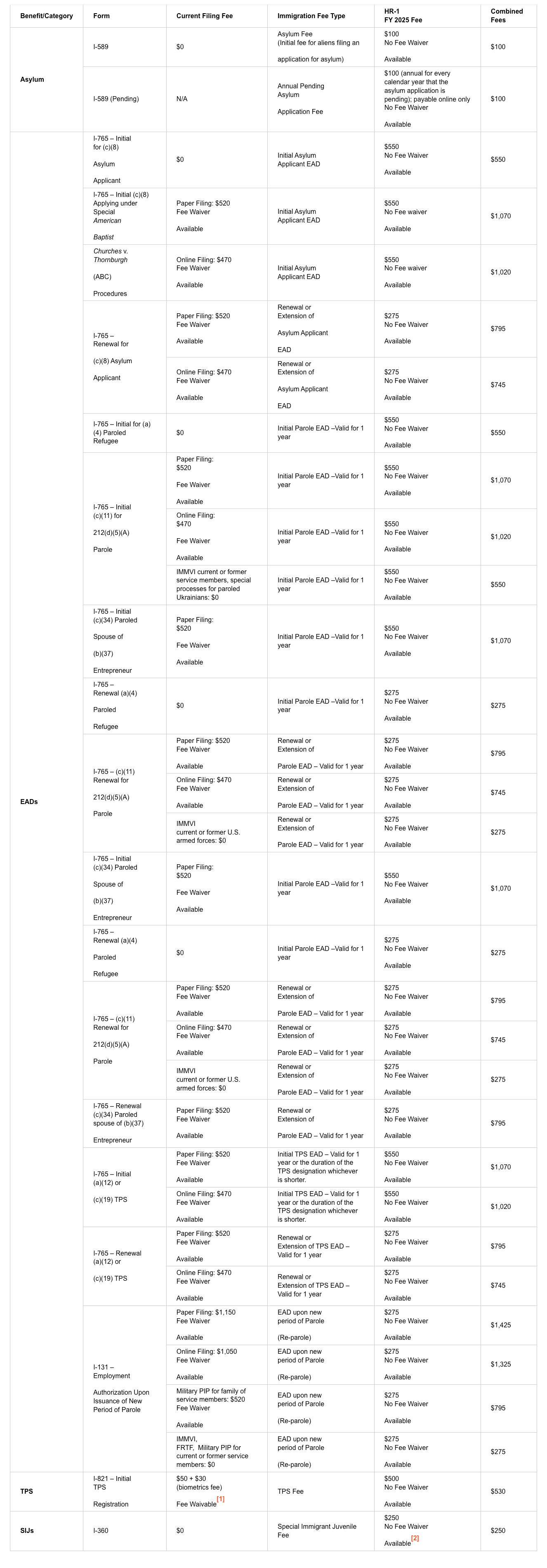
USCIS ha anunciado que, a partir del 5 de diciembre de 2025, la validez máxima para los permisos de trabajo iniciales y de renovación disminuirá de 5 años a 18 meses para:
Refugiados
Personas a quienes se les concedió asilo
Personas a las que se les concedió suspensión de deportación o expulsión
Solicitantes con casos pendientes de asilo o de suspensión de deportación
Solicitantes con ajuste de estatus pendiente bajo INA § 245
Solicitantes con casos pendientes para suspensión de deportación, cancelación de remoción, o
NACARA (Ley de Ajuste Nicaragüense y Alivio Centroamericano)
Cualquier solicitud de EAD presentada o pendiente a partir del 5 de diciembre de 2025 se verá afectada.
**Sin embargo, es importante señalar que las personas a las que se les ha aprobado la solicitud de asilo no están obligadas a solicitar ni utilizar un EAD/permiso de trabajo para empleo. En su lugar, se les permite usar su I-94 u otro documento que les haya sido emitido tras la aprobación de su solicitud de asilo, porque por ley el gobierno está obligado a emitir a todos los asilados un documento que les permita trabajar conforme a la Sección 208(c)(1)(B) de la Ley de Inmigración y Nacionalidad.
Por lo tanto, se espera que este intento de reducir ilegalmente el periodo de validez de algunos de los permisos de trabajo (EAD) mencionados anteriormente fracase, siempre que los tribunales emitan órdenes que obliguen al USCIS a crear políticas coherentes con la ley existente.
Nuevo Límite de un Año o Menos para Permisos de Trabajo para TPS, Libertad Condicional y Categorías de Inmigrantes Relacionadas
Bajo la Ley One Big Beautiful Bill Act, firmada el 4 de julio de 2025, USCIS también limitará la validez del permiso de trabajo (EAD) a un año o menos—si la fecha de finalización del TPS o de la libertad condicional es anterior—para:
Personas en libertad condicional como refugiados
Personas a quienes se les concedió Estatus de Protección Temporal (TPS)
Personas a quienes se les concedió libertad condicional por otros motivos (por ejemplo, libertad condicional humanitaria)
Personas con una solicitud de TPS pendiente
Cónyuges de emprendedores en libertad condicional
Estas normas se aplican a todos los Formularios I-765 presentados o pendientes a partir del 22 de julio de 2025.
Se espera que esto lleve a que USCIS invierta muchos recursos en renovar las tarjetas de permiso de empleo (EAD) para individuos, tales como refugiados, a quienes se les permite permanecer permanentemente en EE. UU., resultando en una menor capacidad para tramitar de forma adecuada y oportuna otras peticiones de inmigración.
¿Qué Significa Esto para Quienes se Ven Afectados?
Periodos de validez más cortos para los permisos de trabajo (EAD) resultarán en:
Renovaciones de EAD más frecuentes, lo que puede implicar citas adicionales e innecesarias para biometría
Renovaciones más frecuentes de permisos de conducir REAL ID, especialmente en estados donde no existe una opción para un permiso de conducir estándar / no REAL ID, lo que puede implicar citas adicionales e innecesarias en el Registro de Vehículos Motor
Pérdida de tiempo en el trabajo para gestionar la renovación de EAD y licencias, que antes era innecesaria
Mayor importancia de controlar las fechas de caducidad para solicitar a tiempo
Posibles impactos en la continuidad del trabajo si se retrasan las renovaciones de autorizaciones de empleo
Recomendamos a los clientes a presentar solicitudes de renovación de la tarjeta de permiso de trabajo / EAD lo antes posible para evitar interrupciones en la autorización de empleo, y siempre que sea posible a obtener un estatus en una categoría migratoria que no requiera un EAD para empleo, como el estatus de Asilado o Residencia Permanente Legal.
¿Cuál es la Fecha más Temprana en la que Puedo Presentar la Aplicación para Renovar mi Tarjeta de Autorización de Empleo?
Actualmente, lo más pronto que USCIS acepta solicitudes de renovación del permiso de trabajo / EAD es 180 días antes de la fecha de caducidad de la tarjeta EAD. Recomendamos que las solicitudes de renovación EAD se presenten lo más cercano posible a esta fecha para evitar o minimizar interrupciones laborales.
¿Qué Significa un Permiso de Trabajo mas Corto para Empresas y Empleadores?
Periodos de validez más cortos resultarán en:
Más revisiones de las tarjetas EAD para asegurar que la fuerza laboral de una empresa tenga la autorización de empleo adecuada
Posible pérdida de productividad de los empleados debido a la exigencia de que renueven con mayor frecuencia los permisos de trabajo y otros documentos relacionados, como (como el carné de conducir)
Mayor potencial de sanciones relacionadas con infracciones laborales
¿Se Aplican los Cambios a los Permisos de Empleo (EAD) ya Emitidos?
No. USCIS no ha anunciado el acortamiento retroactivo de los permisos EAD existentes. Si su tarjeta fue emitida bajo las reglas de validez anteriores, sigue siendo válida hasta la fecha de caducidad impresa. Los nuevos límites sólo se aplican a los EAD nuevos o a las renovaciones de estos presentados después de las fechas de efectividad de estas políticas.
¿Habrá Prórrogas Automáticas de EAD o Periodos de Gracia Durante la Renovación?
¿Cambia esto el Estatus Migratorio Subyacente o la Elegibilidad de una Persona para Beneficios?
No. Estas actualizaciones se refieren únicamente a la duración de la autorización de empleo, no al estatus migratorio sustantivo. Si alguien cumple los requisitos para asilo, TPS, libertad condicional o ajuste, esas condiciones subyacentes no se ven afectadas. Solo han cambiado el periodo de validez de la tarjeta de trabajo EAD y los requisitos de renovación.
¿Puede Alguien Solicitar una Exención de Tarifas por Renovaciones de EAD más Frecuentes?
La elegibilidad para exenciones de tarifas del USCIS depende de las circunstancias individuales. Consulta con tu asesor legal para ver si cumples los requisitos y si tiene sentido presentar una exención.
¿Qué Medidas Deben Tomar Ahora los Titulares de EAD para Evitar Problemas?
Haga seguimiento cuidadoso la caducidad de su EAD. Una validez más corta significa renovaciones más frecuentes.
Establezca recordatorios con suficiente antelación y prepare las solicitudes de renovación del permiso de trabajo oportunamente.
Confirme tu elegibilidad y categoría antes de presentar la solicitud, ya que los nuevos límites varían según su estatus o el tipo de solicitud.
Manténgase informado sobre las actualizaciones de USCIS y DHS, incluyendo cualquier cambio o guía futura (por ejemplo, relacionada con prórrogas automáticas).
Nuestra firma de abogados de inmigración en Boston están disponibles para ayudarle a supervisar los plazos y presentar renovaciones de manera oportuna.
Nuestros Aboados de Inmigración en Boston, MA Están Aquí para Ayudarle
Si cree que estas actualizaciones pueden afectar su caso y desea buscar alternativas migratorias a tener que mantener un EAD — o si necesita ayuda para planificar renovaciones puntuales de su EAD — por favor contacte a nuestro despacho al: 617-523-6320 (ext.0) para concertar una consulta con uno de nuestros abogados experimentados en inmigración de Boston o para enviar una solicitud de consulta en línea[15]. Nuestro equipo está listo para guiarlo durante todo su proceso migratorio.
On December 4, 2025, U.S. Citizenship and Immigration Services (USCIS) announced it has issued new policy updates[29] that will shorten the maximum validity period for many Employment Authorization Documents (EADs).
Why USCIS Is Reducing Work Authorization Document (EAD) Validity Periods?
USCIS has made the claim that more frequent vetting helps the agency detect fraud, identify potential security risks, and maintain up-to-date background checks, and as a result, the agency is shortening how long certain Work Authorization Documents (EAD) remain valid.
However, a careful review of the existing immigration laws would reveal that USCIS has the authority and the ability to perform “vetting” and background checks as frequently as they deem necessary without the need to reduce the validity period of work permits. Lower validity periods will only cause DHS to spend resources on the production of more work permits and lessen their capacity to perform meaningful evaluations and assessments of potential safety threats.
For example, Section 208(d)(1) of the Immigration & Nationality Act specifically states that the government may run security background checks on applicants for asylum at any time and can even mandate the applicant to submit biometrics for this purpose. It is clear the only reason that USCIS wants to lower the validity period of Employment Authorization Documents (EAD) is because the current Administration, along with Congress, has decided to place additional and unnecessary burdens on immigrants in the United States, particularly those who are often the most vulnerable, such as refugees.
EAD Validity Reduced to 18 Months for Several Immigrant Categories
USCIS has announced that effective December 5, 2025, the maximum validity for initial and renewal EADs will decrease from 5 years to 18 months for:
Refugees
Individuals granted asylum
Individuals granted withholding of deportation or removal
Applicants with pending asylum or withholding cases
Applicants with pending adjustment of status under INA § 245
Applicants with pending cases for suspension of deportation, cancellation of removal, or
NACARA (Nicaraguan Adjustment and Central American Relief Act)
Any EAD / work authorization application filed or pending on or after December 5, 2025 will be affected.
**It is important to note however, that individuals who have had their asylum application approved are not required to apply for or use an EAD / work permit for employment. Instead, they are permitted to use their I-94 or other document issued to them upon approval of their asylum application, because by law the government is obligated to use issue all asylees a document to allow them to work pursuant Section 208(c)(1)(B) of the Immigration and Nationality Act.
Therefore, it is expected that this attempt to unlawfully reduce the validity period of some of the EAD’s listed above should fail, so long as the courts will issue orders requiring USCIS to create policies that are consistent with the law.
New One-Year Limit or Less for EADs for TPS, Parole & Related Immigrant Categories
Under the One Big Beautiful Bill Act, signed on July 4, 2025, USCIS will also limit EAD validity to one year or less—if TPS or parole end date is earlier—for:
Individuals paroled as refugees
Individuals granted Temporary Protected Status (TPS)
Individuals granted parole for other reasons (i.e. humanitarian parole)
Individuals with a pending TPS application
Paroled spouses of entrepreneurs
These rules apply to all Forms I-765 filed or pending on or after July 22, 2025.
This is expected to cause USCIS to spend a great deal of resources renewing EAD’s for individuals, like refugees, who are permitted to remain permanently in the U.S., resulting in a reduced capacity to properly and timely process other immigration petitions.
What This Means for Those Affected
Shorter work authorization / EAD validity periods will result in:
More frequent EAD renewals, which may involve additional and unnecessary appointments for biometrics
More frequent renewals of REAL ID Driver’s Licenses, particularly in states where there is not an alternative option for a standard/Non-REAL ID Driver’s Licenses, which may involve additional and unnecessary appointments at the Registry of Motor Vehicles
Loss of time from work to manage the renewal of EAD’s and licenses, which was previously unnecessary
Increased importance of tracking expiration dates in order to apply on time
Potential impacts on work continuity if work authorization renewals are delayed
We encourage clients to submit EAD renewal filings as early as possible to avoid gaps in employment authorization, and whenever possible to obtain status in an immigration category that does not require an EAD for employment, such as status as an Asylee or Lawful Permanent Residency.
What is the Earliest I Can File to Renew my Employment Authorization Card (EAD)?
Currently, the earliest that USCIS accepts EAD renewal applications is 180 days before your EAD expiration date. We recommend that EAD renewal applications get filed as close to this date as possible in order to avoid or minimize employment interruptions.
What Does a Shorter EAD Mean for Businesses and Employers?
Shorter work permit / EAD validity periods will result in:
More reviews of EAD to ensure that a business’ work force has proper employment authorization
Potential loss of productivity of employees due to the requirement that they more frequently renew EAD’s/work permits and other related documents, such (as a driver’s license)
Increased potential for penalties related to work force violations
Do the Changes Apply to EADs Already Issued?
No. USCIS has not announced retroactive shortening of existing EADs. If your work authorization card was issued under the prior validity rules, it remains valid until its printed expiration date. The new limits apply only to new EADs or renewals filed after the effective dates of these policies.
Will There be Automatic EAD Extensions or Grace Periods While Renewing?
Does this Change a Person’s Underlying Immigration Status or Benefits Eligibility?
No. These updates concern only the duration of employment authorization, not substantive immigration status. If someone qualifies for asylum, TPS, parole, or adjustment, those underlying conditions are unaffected. Only the EAD validity period and renewal requirements have changed.
Can Someone Request a Fee Waiver or Exemption for More Frequent EAD Renewals?
Eligibility for USCIS fee waivers or exemptions depends on individual circumstances. You should consult with your legal advisor to see whether you qualify and whether filing with a waiver makes sense.
What Steps Should Current EAD Holders Take Now to Avoid Issues?
Track your Employment Authorization Document / EAD expiration carefully. Shorter validity means more frequent renewals.
Set reminders well in advance of expiration and prepare renewal applications early.
Confirm your eligibility and category before filing, as the new limits differ depending on status or application type.
Maintain awareness of USCIS and DHS updates, including any future changes or guidance (for example, related to automatic extensions).
Our Boston immigration lawyers[26] are available to help you monitor deadlines and file renewals in a timely manner.
Our Immigration Lawyers in Boston, MA Are Here to Help
If you believe these updates may affect your case, and you want to pursue immigration alternatives to having to maintain an EAD — or if you need assistance planning for timely work authorization renewals—please contact our office at: 617-523-6320 (ext.0) to schedule a consultation with one of our experienced Boston immigration attorneys or submit an online consultation request[15]. Our team is ready to guide you through your entire immigration journey.
Un Matrimonio Supera Barreras Migratorias: Una Saga en 3 Partes
Posted By
Florin Nita
On
In
Historias Exitosas de Inmigración |
Comments Disabled
Parte 1: Cuando el Amor No Es Suficiente—Dijeron que Su Matrimonio No Era Real
¿Alguna vez te has preocupado de que un pequeño error en tus trámites migratorios pudiera arruinar el futuro de tu familia? Eso casi les pasa a Mory y Sandra.
Cuando Mory Conoció a Sandra
Mory llegó a Estados Unidos desde Senegal con poco más que determinación y esperanza. Trabajaba largas horas en empleos que le exigían físicamente todo, trabajos que otros evitaban. Pero no se quejaba. Para él, cada gota de sudor era una inversión en un futuro mejor.
Entonces conoció a Sandra. Ella había tenido su propia experiencia como inmigrante a los Estados Unidos, habiendo emigrado de la República Dominicana años antes y obteniendo la ciudadanía estadounidense. Al principio, le divirtió el esfuerzo de Mory por aprender español solo para conectar con su cultura. Pronto, se conmovió por su amabilidad, resiliencia y la forma en que la hacía reír incluso cuando la vida le pesaba.
Sandra tenía 50 años y tuvo que dejar su trabajo para cuidar a su madre, quien había enfermado gravemente. El único constante de alegría en su vida era Mory, cuya devoción nunca flaqueó, a pesar de ser 10 años menor. Así que, cuando él le propuso matrimonio, ella no dudó en aceptar.
Pero el Amor no fue Suficiente para USCIS
Poco después de casarse en el otoño de 2014, comenzaron el proceso de Mory para solicitar la residencia permanente legal basada en su matrimonio con una ciudadana estadounidense[30]. Sandra ya había pasado por su propio proceso de inmigración y, como contaban con fondos limitados, recurrieron a un notario para preparar sus documentos. Cuando llegaron a la entrevista con el oficial de inmigración, su caso carecía de la mayoría de las pruebas financieras importantes que generalmente se requieren para su aprobación (es decir, impuestos conjuntos, registros bancarios, contratos de arrendamiento, seguros, etc.). Su caso fue débil desde el principio.
Meses después, investigadores llamaron a su puerta. Interrogaron al dueño de su apartamento, con quien Sandra nunca había tenido contacto, y a vecinos que ella apenas conocía. Vecinos que rara vez la veían porque pasaba la mayor parte del día al lado de su madre enferma.
Los investigadores descubrieron otras pruebas de agencias gubernamentales que respaldaban su conclusión de que el matrimonio era fraude migratorio. Sandra no había actualizado su dirección en su licencia de conducir en el Registro de Vehículos Motorizados, por lo que figuraba una dirección diferente a la de su esposo y domicilio conyugal.
Además, los registros tributarios del IRS mostraban que la pareja no había presentado sus impuestos “conjuntamente”, durante su primer año de matrimonio, porque la persona que preparó los impuestos de Sandra pensó que no podían presentarlos conjuntamente, ya que ellos no habían estado casados durante la mayor parte del año calendario.
Recepción de una Solicitud de Evidencia (RFE) y una Notificación de Intención de Negación (NOID)
En 2017, el USCIS emitió una Solicitud de Evidencia (RFE) solicitando información para refutar la evidencia negativa que los investigadores habían recopilado. El documento era complicado y difícil de entender y responder para Sandra y Mory sin asistencia legal, así que simplemente hicieron lo mejor que pudieron. Desafortunadamente, esto empeoró las cosas.
La persona que preparó su solicitud inicial les dijo que simplemente enviaran los registros de su cuenta bancaria conjunta y fotografías, y como tenían ambas, esto fue lo que enviaron. No sabían que las fotografías tienen poco valor como prueba en estos casos, y dado que su cuenta bancaria conjunta solo tenía el sueldo de Mory depositado y ninguna transacción de Sandra, esto solo perjudicaría su caso.
Para 2018, USCIS había construido un caso que pintaba el amor de Sandra y Mory como una farsa. Emitieron una Notificación de Intención de Negación, amenazando con desmantelar todo lo que la pareja había construido.
¿Sobreviviría su vínculo a un sistema que parecía decidido a destruirlo?
Parte 2: Llevando la Lucha a los Tribunales—Un Matrimonio Bajo Ataque
¿Qué haría si el gobierno se negara a creer que su matrimonio es real, sin importar cuántas pruebas les presentara?
Comenzando de Nuevo
Para cuando Mory y Sandra fueron referidos a los abogados de inmigración de FitzGerald Law Company, estaban exhaustos. Años de sospechas, llamadas a la puerta por investigadores y noches de preocupación por perderse el uno al otro les habían dejado marcados.
El abogado FitzGerald sabía que su mejor alternativa era retirar el antiguo caso de residencia matrimonial sin fundamento y comenzar de cero con una nueva solicitud de residencia por matrimonio I-130[30]. Con la orientación de nuestro equipo, la pareja reunió todo lo que tenía: seguro médico conjunto, licencias de conducir con su dirección compartida, cuenta bancaria conjunta con depósitos directos del empleador con un historial del uso de la cuenta para pagar sus facturas, seguro médico, historiales médicos e impuestos conjuntos—prueba de una vida construida juntos, paso a paso. Presentaron la nueva solicitud y confiaban en que esta vez la verdad prevalecería.
Pero USCIS se negó a olvidar el pasado. En lugar de sopesar la montaña de pruebas nuevas, se aferraron a los errores y deficiencias de la primera solicitud y, una vez más, emitieron una Notificación de Intención de Negar (NOID) su caso.
El abogado FitzGerald se opuso a esto con un Memorando legal donde explicaba por qué USCIS debería centrarse en la nueva solicitud, en lugar de la anterior, y proporcionó copias actualizadas de los registros financieros. El USCIS pasó por alto todas las nuevas pruebas y, de todos modos, Negó la petición.
Manteniendo Válido el Permiso de Trabajo
Sandra y su esposo estaban devastados. Mory se enfrentaba a la cancelación de su permiso de trabajo, que necesitaban para sobrevivir, por lo que el abogado FitzGerald les aconsejó presentar una “apelación administrativa” ante la Junta de Apelaciones de Inmigración, lo que le permitiría seguir trabajando legalmente.
Este debería haber sido un caso sencillo. La pareja llevaba años reuniendo pruebas para respaldar su matrimonio, por lo que no había ninguna razón lógica para mantener la Negación. Desafortunadamente, su apelación continuó en espera durante años sin una decisión.
Agotados, pero no destrozados, la pareja preguntó si había algo más que pudiéramos hacer. En ese momento, nuestro equipo legal decidió aconsejarles que dieran un paso audaz y presentaran un “Writ of Mandamus” (demanda en un Tribunal Federal) contra el USCIS[31] y el Departamento de Seguridad Nacional. Sería costoso, largo y difícil, pero para Mory y Sandra, que creían en su matrimonio y en la justicia, esto valía la pena.
¿Reconocería finalmente el tribunal lo que USCIS se negó a ver: que el matrimonio de Mory Sandra era real, unidos por el amor y el sacrificio?
Las denegaciones de inmigración no siempre son el fin. Con la estrategia legal y la ejecución adecuadas, aún puede haber opciones. Si su familia enfrenta este tipo de desafío, comuníquese con FitzGerald Law Company. ¡Luchamos por familias como la suya! Llame hoy mismo para programar una consulta al 617-303-2600 o complete una solicitud de consulta en línea[4].
Parte 3: Después de 10 años… ¡Justicia al Fin!
Después de 10 años de denegaciones, retrasos y batallas judiciales, Sandra y Mory finalmente recibieron la noticia que tanto esperaban.
Primera Demanda al USCIS en un Tribunal Federal (Writ of Mandamus)
En 2020, tras seis años de lucha, FitzGerald Law Company presentó una demanda de Auto de Mandamus[31] contra USCIS en un tribunal federal de Boston por demoras irrazonables en la decisión de la solicitud de residencia migratoria por matrimonio[30] de Mory y Sandra. La Fiscalía de EE. UU. admitió que el expediente era demasiado extenso para revisarlo dentro del plazo de 60 días y solicitó más tiempo. El abogado FitzGerald recomendó conceder la prórroga, una decisión que resultó estratégica. Tras revisar el caso, la Fiscalía de EE. UU. acordó anular la denegación y devolverlo a USCIS para una nueva decisión.
En respuesta a otra solicitud de pruebas de USCIS, con la esperanza de que esto fuera suficiente, la pareja presentó más de 109 páginas de nuevas pruebas: declaraciones de impuestos conjuntas actualizadas, cuentas bancarias y registros de seguros como evidencia de un matrimonio que había resistido la prueba del tiempo, incluso bajo presiones extraordinarias. Pero el USCIS estancó el caso durante dos años, aparentemente esperando que su relación se desmoronara. Durante este tiempo, Mory no pudo viajar, tuvo que pagar por la renovación de su permiso de trabajo y no acumulaba tiempo para ser elegible para solicitar la ciudadanía estadounidense.
Cuando finalmente USCIS tomó la decisión, esta fue devastadora: el USCIS volvió a Negar la petición, alegando deficiencias en la solicitud original de 2014, en lugar de la sólida nueva evidencia presentada.
Segunda Demanda Contra el USCIS
Sin apelación administrativa disponible, los abogados de FitzGerald Law Company presentaron una segunda demanda federal (Writ of Mandamus), esta vez no basada en una demora irrazonable en la adjudicación de una petición, sino impugnando directamente la Negación errónea del USCIS de la petición I-130 para un cónyuge[30].
En el tribunal, el gobierno presentó el “Expediente Administrativo Certificado”, pero nuestros abogados notaron que este estaba incompleto. FitzGerald Law Company preparó y argumentó exitosamente una Moción para Ampliar el Expediente, para que el juez pudiera ver todas las pruebas del matrimonio. El abogado FitzGerald también presentó una Moción para uan Sentencia Sumaria (“Motion for Summary Judgement”), respaldada por pruebas financieras que demostraban años de convivencia. El gobierno insistió en que, dado que la ley establece específicamente que un matrimonio no puede formalizarse “únicamente” con fines migratorios, la primera solicitud era la más importante y, por lo tanto, debía prevalecer.
Justicia al Fin: Su Amor y Perseverancia Finalmente Triunfarían
El día de la audiencia, Sandra permaneció sentada en silencio en la sala del tribunal todo el día, aunque ella no estaba obligada a testificar. Su presencia fue más elocuente que palabras. Este era un símbolo de su compromiso. Todos los que observaban lo vieron: no se trataba de un matrimonio simulado, sino de una unión forjada a través del amor, la enfermedad, las dificultades económicas y años de espera. Antes de que el juez pudiera siquiera emitir un fallo, el USCIS anuló su denegación y aprobó la petición familiar I-130.
El momento fue poetico. La aprobación llegó justo cuando Sandra y Mory se preparaban para celebrar su décimo aniversario de bodas. Tras una década de miedo, incertidumbre y batallas judiciales, finalmente consiguieron lo que anhelaban: seguridad y estabilidad para su familia, y un camino hacia la ciudadanía americana para Mory.
En FitzGerald Law Company, también celebramos. Todo nuestro equipo[32] conocía a los clientes y el caso, y habíamos trabajado arduamente en él durante tantos años. Su caso no fue solo una victoria legal, sino una prueba de que con amor, perseverancia, valentía y una defensa sagaz, la justicia es posible.
Si inmigración le ha dicho que no, no pierda la esperanza. Aún puede que haya un camino a seguir. Contacte hoy mismo con nuestro bufete de abogados de inmigración en Boston[33], FitzGerald Law Company, y agende uan consulta— su victoria podría ser la próxima. Llame al 617-303-2600 o complete una solicitud de consulta en línea[4].
A Marriage Overcomes Immigration Barriers: A 3 Part Saga
Part 1: When Love Isn’t Enough—They said Their Marriage Wasn’t Real
Have you ever worried that a small mistake in your immigration paperwork could destroy your family’s future? That almost happened to Mory and Sandra.
When Mory Met Sandra
Mory arrived in the U.S. from Senegal with little more than determination and hope. He worked long hours at jobs that demanded everything of him physically, work others would shy away from. But he did not complain. To him, every drop of sweat was an investment in a better future.
Then he met Sandra. She had her own journey, having immigrated from the Dominican Republic years before and becoming a U.S. citizen. At first, she was amused by Mory’s effort to learn Spanish just to connect with her culture. Soon, she was touched by his kindness, resilience, and the way he made her laugh even when life weighed heavily on her.
Sandra was 50 years old and had to leave her job to take care of her mother, who had become very ill. The one constant bright spot in her life was Mory, who’s devotion never wavered, even though he was 10 years younger. So, when he asked her to marry him, she did not hesitate to say yes.
But Love Was Not Enough for USCIS
Not long after they were married in the Fall of 2014, they started the process to file for Mory’s legal permanent resident status based on marriage to a U.S. citizen[34]. Sandra had already gone through her own immigration process and since they had limited funds, they relied on a “notary” to prepare their immigration papers. When they found themselves at their interview with an immigration officer, their case lacked most of the important financial evidence generally required for approval (i.e. joint taxes, bank records, leases, insurance, etc.). Their case was weak from the start.
Months later, investigators knocked on their door. They questioned their landlord with whom she had never had contact and neighbors Sandra barely knew. Neighbors who had rarely seen her because she spent most days at her sick mother’s side.
The investigators discovered other evidence from government agencies to support their conclusion that the marriage was immigration fraud. Sandra had not updated her address on her driver’s license with the Registry of Motor Vehicles, so it listed a different address from her husband and their marital home. In addition, the IRS records showed that they had not filed taxes together, “jointly,” for their first year of marriage, because the person who prepared Sandra’s taxes thought they could not file together since they were not married for most of the “Calendar” year.
Receiving a Request for Evidence (RFE) and a Notice of Intent to Deny (NOID)
In 2017, USCIS issued a Request for Evidence (RFE) seeking information to refute the negative evidence that the investigators had collected. The document was complicated, and difficult for Sandra and Mory to understand and respond to without legal assistance, so they simply did the best they could. Unfortunately, this made things worse.
The person that prepared their application told them to send records from their joint bank account and photographs, and since they had both, this is what they sent. They did not know that photographs have little value as evidence in these cases, and because their joint bank account, only had Mory’s paycheck deposited into it and no transactions from Sandra, this would only hurt their case.
By 2018, USCIS had built a case that painted their love as a sham. They issued a Notice of Intent to Deny, threatening to dismantle everything they had built.
Would their bond survive a system that seemed determined to tear it apart?
Part 2: Taking the Fight to Court — A Marriage Under Attack
What would you do if the government refused to believe your marriage was real, no matter how much proof you gave them?
Starting Again from Scratch
By the time Mory and Sandra were referred to the immigration lawyers at FitzGerald Law Company, they were exhausted. Years of suspicion, knocks on the door from investigators, and nights spent worrying about losing each other had taken their toll.
Attorney FitzGerald knew their best alternative was to withdraw the old unsubstantiated marriage residency case and start fresh with a new I-130 marriage petition[34] filing. With our team’s guidance, the couple gathered everything they had: joint health insurance, driver’s licenses listing their shared address, joint bank account with employer direct deposits and a history of the account’s usage to pay their bills, health insurance and medical records, and joint taxes — proof of a life built together, piece by piece. The new petition was filed, and they were confident this time the truth would prevail.
But USCIS refused to move on from the past. Instead of weighing the mountain of new evidence, they clung to the mistakes and deficiencies from the first application and once again they issued a Notice of Intent to Deny (NOID) their case.
Attorney FitzGerald objected to this with a legal memorandum explaining why USCIS should be focusing on the new application, instead of the prior one, and additional updated copies of financial records were provided. USCIS overlooked all the new evidence and denied the petition anyway.
Maintaining a Valid Work Permit
Sandra and her husband were devastated. Mory was facing the cancellation of his work permit, which they needed to survive, so Attorney FitzGerald advised them to file an “administrative appeal,” with the Board of Immigration Appeals, which would allow Mory to keep working legally.
This should have been a simple case. The couple had now been collecting evidence in support of their marriage for years, so there was no logical reason to uphold the denial. Unfortunately, their appeal continued to linger for years without a decision.
Drained but not broken, the couple asked if there was anything else we could do. At that point our legal team decided to advice the couple to take a bold step and file a Writ of Mandamus (law suit in Federal Court)[35] against USCIS and the Department of Homeland Security. It would be expensive, time-consuming and difficult, but for Mory and Sandra who believed in their marriage and in justice, it was worth it.
Would the court finally recognize what USCIS refused to see — that theirs was a real marriage, bound by love and sacrifice?
Immigration denials are not always the end. With the right legal strategy and execution, there may still be options. If your family is facing this kind of challenge, reach out to FitzGerald Law Company. We fight for families like yours! Call to schedule a consultation today at: 617-303-2600 or fill out an online consultation request[15]
Part 3: After 10 Years…Justice at Last
After 10 years of denials, delays, and court battles, Sandra and Mory finally received the news they had been waiting for.
First USCIS Lawsuit in Federal Court (Writ of Mandamus)
In 2020, after six years of struggle, FitzGerald Law Company filed a Writ of Mandamus lawsuit against USCIS[35] in federal court in Boston for unreasonable delays in making a decision on Mory and Sandra’s marriage immigration residency petition[34]. The U.S. Attorney’s Office admitted the record was too large to review within the 60-day deadline and asked for more time. Attorney FitzGerald advised granting the extension — a decision that proved strategic. After reviewing the case, the US Attorney’s Office agreed to vacate the denial and send the case back to USCIS for a new decision.
Responding to another Request for Evidence from USCIS and hoping this would surely be enough, the couple submitted more than 109 pages of new evidence — updated joint tax returns, bank accounts, and insurance records as proof of a marriage that had stood the test of time, even under extraordinary stress. But USCIS stalled for two years, seemingly waiting for their relationship to crumble. During this time, Mory couldn’t travel, had to pay to renew his work permit, and was not accruing time to be eligible to file for U.S. citizenship.
When a decision finally came, it was devastating: USCIS denied the petition again, citing deficiencies from the original 2014 application rather than the strong new evidence.
Second Lawsuit Against USCIS
With no administrative appeal available, the attorneys at FitzGerald Law Company filed a second federal lawsuit (Writ of Mandamus), this time not based on an unreasonable delay in adjudicating a petition but directly challenging USCIS’s erroneous denial of the I-130 petition for a spouse.[34]
In court, the government produced the “Certified Administrative Record,” but our attorneys noticed it was incomplete. FitzGerald Law Company successfully prepared and argued a Motion to Expand the Record so the judge could see all the evidence of the marriage. Attorney FitzGerald also filed a Motion for Summary Judgment supported by financial evidence showing years of shared life. The government insisted that because the law specifically states that a marriage cannot be entered “solely” for immigration purposes, the first application was the most important and therefore should control.
Justice At Last — Their Love and Perseverance Finally Won
On the day of the hearing, Sandra sat quietly in the courtroom all day, even though she wasn’t required to testify. Her presence spoke louder than words. It was a symbol of her commitment. Observers could see it: this was no sham marriage, but a partnership forged through love, illness, financial hardship, and years of waiting. Before the judge could even issue a ruling, USCIS rescinded its denial and approved the I-130 family petition.
The timing was poetic. The approval arrived just as Sandra and Mory were preparing to celebrate their 10th wedding anniversary. After a decade of fear, uncertainty, and court battles, they finally had what they longed for: security and stability for their family, and a path to citizenship for Mory.
At FitzGerald Law Company, we celebrated too. Our entire team[14] knew the clients and the case, and we had worked so hard on it for so many years. Their case was not just a legal victory, it was proof that with love, perseverance, courage and skilled advocacy, justice is possible.
If you’ve been told “no” by immigration, don’t lose hope. There may still be a way forward. Contact our Boston Immigration law firm[36], FitzGerald Law Company today for a consultation — your victory could be next: 617-303-2600 or fill out an online consultation request[15]
La Proclamación de Trump de $100,000 para la visa H-1B: Por Qué es Ilegal e Ineficaz
Posted By
Florin Nita
On
In
Artículos,Artículos de Inmigración,Spanish Site |
Comments Disabled
La proclamación se basa en la afirmación de que los trabajadores H-1B son “mano de obra extranjera barata” que reduce los salarios de Estadounidenses. En realidad, cualquiera que esté familiarizado con el proceso de visa H-1B[1] sabe que a cada empleado H-1B se le debe pagar un salario certificado por el Departamento de Trabajo igual o superior al salario predominante para los trabajadores estadounidenses en puestos similares. La sugerencia de que trabajadores bajo la visa H-1b perjudican el mercado laboral estadounidense es simplemente infundada.
De hecho, una regulación como esta probablemente no generaría empleos para trabajadores estadounidenses, dado que estos puestos se están cubriendo actualmente con extranjeros debido a la escasez de trabajadores estadounidenses cualificados en ciertos campos. Esto probablemente resultará en un aumento en la contratación de más trabajadores extranjeros remotos, lo que en realidad reduciría los impuestos que estos trabajadores habrían pagado al Tesoro estadounidense y los efectos positivos del consumo local y la innovación de los trabajadores bajo visa H-1B en la economía estadounidense.
Afortunadamente, para que los cambios en las tarifas de presentación del USCIS sean legales, es necesario que el Congreso apruebe una ley o que la agencia, el USCIS, promulgue un reglamento. Para que un reglamento se promulgue, debe publicarse en el Registro Federal durante un período de tiempo suficiente para recibir comentarios públicos, estos deben considerarse y, posteriormente, puede emitirse la regulación.
Una promulgación ejecutiva nunca se ha reconocido como un procedimiento legal para ajustar, o en este caso, para crear, una nueva tarifa de presentación del USCIS. Los tribunales que revisaron intentos similares de la anterior administración Trump, como el caso del Centro de Recursos Legales para Inmigrantes et al. contra Wolf et al., una decisión del Tribunal de Distrito de los Estados Unidos emitida por Jeffery S. White para el Distrito Norte de California (véase el expediente n.° 4:2020-CV-05883 (2020)), dictaminó que las tarifas declaradas por métodos distintos a las regulaciones debidamente promulgadas o el mandato del Congreso son ilegales.
De hecho, desde ya se están preparando demandas para impugnar esta ampliación ilegal de la autoridad ejecutiva. Se prevé que estas acciones legales tendrán éxito, a menos que la Corte Suprema emita una decisión que socave el verdadero estado de derecho establecido por nuestra Constitución.
The proclamation rests on the claim that H-1B workers are “cheap foreign labor” who drive down wages. In reality, anyone familiar with the H-1B visa process[9] would know that every H-1B employee must be paid a Department of Labor–certified wage at or above the prevailing rate for U.S. workers in similar roles. The suggestion that these workers undercut the labor market is simply unfounded.
In fact, if a regulation like this passes, it would not likely generate jobs for U.S. workers, given these jobs are being filled with foreigners due to insufficient qualified American workers in certain fields. This will more likely result in an increase in hiring more remote foreign workers, reducing the income taxes these H-1B workers would have paid to the U.S. treasury and the positive effects of their local consumption and innovation for the U.S. economy.
Fortunately, changes to USCIS filing fees require a law to be passed by Congress or a regulation to be promulgated by the agency, USCIS, to be legal. For a regulation to be promulgated, it must be published in the Federal Register for a period long enough for public comment, the comments must be considered, and then a regulation can be issued.
An executive promulgation has never been recognized as a lawful procedure to adjust, or in this case, to create a new USCIS filing fee. Courts that reviewed similar attempts by the former Trump Administration, such as Immigrant Legal Resource Center et al v. Wolf et al, a U.S. District Court decision issued by Jeffery S. White for the Northern District of California. (See Docket No. 4:2020-CV-05883 (2020)), ruled that fees declared by methods, other than properly promulgated regulations or congressional mandate, are unlawful.
Lawsuits are already being prepared to challenge this unlawful expansion of Executive Authority, It is anticipated that these legal actions will succeed, unless the Supreme Court issues a decision to undermine the true rule of law established by our Constitution.
If you need help with any visas for your foreign employees or any other immigration issue, call to schedule a consultation with one of our experienced Boston Business Immigration Lawyers[12] at: 617-303-2600 or fill out an online consultation request[15].
USCIS Immigration Filing Fees Under H.R. 1 Reconciliation Bill
On July 18, 2025, U.S. Citizenship and Immigration Services (USCIS) published a Federal Register Notice[39] implementing fee changes mandated by the new H.R. 1 Reconciliation Bill, also known as the “One Big Beautiful Bill[40],” which was passed by Congress on July 3, 2025 and signed into law by President Trump on July 4, 2025. This bill was passed through the budgetary process called reconciliation, which allows for bypassing the usual Senate rules requiring 60 votes for passage.
According to the press release from USCIS[41] , these following adjustments apply to a range of immigration forms and benefit requests, with new rates taking effect for benefit requests postmarked on or after July 22, 2025. Any form postmarked on or after August 21, 2025 without the updated fee payment will be rejected by USCIS.
To help you navigate these changes, we’ve broken down the new fees, critical deadlines, and practical tips for ensuring your filings remain compliant and your applications stay on track.
Effective Dates and Deadlines
July 22, 2025: All benefit requests postmarked on or after this date must include the new H.R. 1 fees.
August 21, 2025: USCIS will reject any submissions lacking the correct fees if postmarked on or after this date.
Be sure to double-check postage dates and fee amounts before mailing your packet to avoid costly delays or outright rejections.
New H.R. 1 Fee: $100 (in addition to any existing filing fees)
Annual Asylum Fee (AAF):
$100 per calendar year for any asylum application pending more than 365 days.
USCIS will issue personalized notices when your AAF is due, including payment instructions and deadlines.
Important: Applicants who filed Form I-589 on or after October 1, 2024, need not proactively track the 365-day mark; USCIS will alert you when the first AAF payment is required.
Updated Employment Authorization Document Fees
For certain categories of Form I-765 (Application for Employment Authorization—EAD), including asylum seekers, parolees, and Temporary Protected Status (TPS) beneficiaries—USCIS has introduced tiered fees:
Initial EAD Applications: $550
EAD Renewal/Extension Applications: $275
Exception: If you request an EAD following approval of a re-parole (via Form I-131), you pay the reduced fee of $275 for your first EAD under the new parole period.
Form I-821 (TPS Registration[44]): Increased from $50 to $500 maximum registration fee.
These adjustments reflect H.R. 1’s goal to better fund USCIS operations and the Immigration Examinations Fee Account (IEFA), while returning excess revenue to the U.S. Treasury’s general fund.
New EAD Validity Periods
H.R. 1 also limits how long employment authorizations can remain valid:
Parolees: EAD valid for up to one year or the duration of parole—whichever is shorter.
TPS Beneficiaries: Initial and renewal EADs valid for up to one year or the duration of TPS status—whichever is shorter.
Plan ahead for renewals by noting these shorter validity windows on your calendar.
Fee Payment and Waiver Guidelines
All H.R. 1 fees must be submitted separately and in addition to any existing USCIS fees under 8 CFR § 106.
While existing fees may be waived under Form I-912 (Request for Fee Waiver) or a written waiver request, the new H.R. 1 fees are not waivable or reducible.
USCIS will continue to adjust fees annually for inflation, as required by law.
Call us today at 617-523-6320 or request a consultation online[15] to ensure you obtain experienced legal representation and caring personalized service for all your immigration, criminal defense and personal injury needs.
What if I submit my form without the new fee?
USCIS will reject any form postmarked on or after August 21, 2025, without the proper H.R. 1 fee. You’ll receive a rejection notice and have to resubmit with the correct fee.
Can I request a waiver of the H.R. 1 fees?
Unfortunately, no. While you may still seek a waiver for existing fees under 8 CFR § 106.3(a), the new H.R. 1 fees are not waivable or reducible.
How will I know when my Annual Asylum Fee is due?
USCIS will send you a personalized notice around your application’s one-year anniversary detailing the AAF amount (currently $100), payment deadline, and submission instructions.
Will there be more fee changes under H.R. 1?
Yes. This notice covers only a subset of H.R. 1 fees. USCIS will announce additional changes—such as for Forms I-131 and I-102—in a future Federal Register notice.